

Elevate Pre-Bid Site Surveys to a Standardised Operating Level.
Runibex Field Management standardises pre-bid site visits through structured survey workflows tailored to variations in scope and bid requirements.
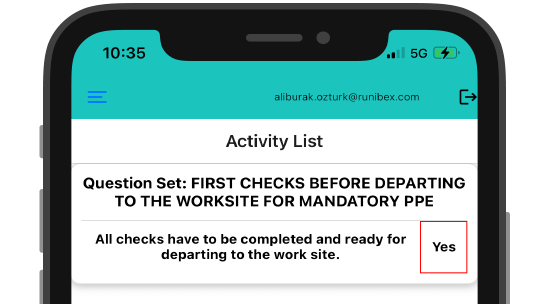
Turn pre-bid site visits into reliable, reusable bid inputs.
Standardise survey quality
Across teams and locations
Reduce follow-up visits
And manual consolidation
Lower delivery risk
Through evidence-backed site conditions
Accelerate pricing
And bid decision-making
Compare multi-site bids
With consistent, structured data
Reuse survey outputs
For planning and mobilisation
What changes when surveys are systemised
Standardised Survey Quality
Consistent, complete site data capture — less dependent on individual habits and experience.
Faster Bid Cycles
Reduced manual consolidation and fewer re-visits enable faster pricing and decisions.
Lower Delivery Risk
Evidence-backed site conditions reduce unknowns, change requests, and cost surprises.
Comparable Multi-Site Data
Evaluate multi-location bids using consistent, report-ready outputs.
Who this is for
Bid & Project Development Teams
General contractors and subcontractors running pre-bid site visits that require repeatable, reliable inputs for pricing and planning.
Project Teams Building BOQs & Cost Items
Infrastructure, retrofit, maintenance, and rollout programmes converting surveys into costed scopes.
Operations & Planning Teams
Teams using survey outputs for mobilisation planning, resource requirements, and risk and constraint management.
Why pre-bid surveys create risk
Informal surveys create formal problems.
Pre-bid site surveys often rely on:
- Personal notes and inconsistent photo sets
- Different capture styles across individuals and teams
- Data fragmented across devices and channels
This Leads To:
- Time-consuming consolidation
- Gaps that trigger re-visits
- Poor comparability across sites
Without an evidence-backed trail — what was observed, when, and under which conditions —
bid risk increases, leading to scope surprises and cost variance.
Field Management addresses this before the bid is submitted, not after delivery begins.
How Field Management turns surveys into bid-ready intelligence
Prepare
Select survey templates aligned to bid scope and variation.
Guide
Lead surveyors through structured, conditional flows.
Capture
Record observations, measurements, and evidence in context.
Confirm
Enforce confirmations for critical inputs and risks.
Report
Generate a consolidated, structured output automatically.
One survey model.
Comparable inputs.
Reduced risk.
Target Operating Model
Preparation
Survey Template Selection (by scope / variation)
On-Site Data Capture
Conditional Logic & Confirmations
Measurements & Evidence Capture (Photo / Video)
Consolidated Report
Same-Day Delivery to Bid & Project Teams
Archive & Reuse
Every survey follows the same structure.
Every bid starts with better inputs.
Key capabilities
Survey Templates Aligned to Scope Variations
Use standard templates per bid type and scope variation — ensuring completeness while remaining adaptable.
Conditional Questions & Guided Flows
Drive completeness through conditional logic that prompts follow-up questions and confirmations when conditions are met.
Measurements & Evidence Capture
Capture measurements in context and attach photo or video evidence to create a credible, reviewable site record.
Offline-Ready Execution
Work uninterrupted in basements, remote sites, and low or no-network environments — synchronising when connectivity returns.
Same-Day Reporting
Convert captured inputs into structured, report-ready outputs delivered to bid stakeholders the same day.
Integration & Reuse
Retain survey outputs for downstream workflows (planning, work orders, risk registers, material lists) and integrate with existing systems where needed.
What a typical pre-bid visit looks like
Pre-Visit
Select the appropriate survey template based on bid scope and variation; confirm required inputs.
On-Site Capture
Record access, ground conditions, electrical readiness, constraints, and existing infrastructure — systematically.
Measurements & Proof
Collect key measurements and support observations with photos and videos.
Risk & Constraints
Document risks, constraints, and assumptions that materially affect cost and delivery.
Close-Out & Reporting
Generate a consolidated report and deliver it to bid and project teams the same day.
What changes when surveys are standardised
Bid Confidence
Pricing and scope are based on consistent, reviewable inputs.
Risk Reduction
Fewer unknowns reduce downstream change and dispute.
Speed
Faster bids without sacrificing quality.
Reuse
Survey outputs feed planning and mobilisation.
Recommended KPIs
SLA
Time from visit completion to report distribution
First-Time Complete
Survey completion rate (no re-visit required)
Evidence Coverage
Rate (photo / video attached where required)
Bid Variance
Or change rate attributable to survey gaps
Multi-Site Comparability
Score (standard fields completed across locations)
Frequently Asked Questions
Is this limited to EV charging rollouts or a specific domain?
No. It applies to any project where a site visit informs scope, cost items, and delivery planning — across infrastructure, retrofit, maintenance, and rollout programmes.
Can surveys be executed offline?
Yes. Teams can capture data without connectivity and synchronise when connectivity is available.
Can we tailor templates to different bid variations?
Yes. Templates can be aligned to bid scope variations while maintaining a standard structure and improving over time through accumulated experience.
Reduce Bid Risk Before Work Begins.
Request a demo to define your pre-bid survey templates, evidence requirements, and reporting outputs — and establish a pilot scope for your upcoming bids.